| Purpose |
To protect employees and contractors from the negative effects of exposure to low temperatures during outdoor winter work, by providing guidelines for monitoring environmental conditions, implementing safety controls, and complying with applicable cold-weather safety regulations. |
| Definition |
Low temperatures are any temperatures below +4°C, regardless of wind chill. Prolonged exposure to such conditions during outdoor work can lead to serious health risks such as frostbite, hypothermia, and trench foot, especially when combined with wet conditions or inappropriate clothing. Early warning signs of cold stress include shivering, numbness in extremities, and difficulty performing motor tasks. |
| Hazards
This list of potential hazards is not comprehensive. Workers are required to complete a Hazard Assessment prior to starting this task to ensure all hazards are identified and controlled.
|
Chemical:
Physical:
- Cold Stress/Hypothermia
- Frostbite
- Excessive perspiration
- Reduced dexterity
- Overexertion
- Reduced visibility
- Equipment Malfunction
- Slips/Trips
Psychosocial:
- Impaired judgement
- Fatigue
|
| Controls |
Engineering:
- Rest Areas
- Carbon Monoxide (CO) Detector
Administrative:
- Hydration
- Work/Rest Scheduling
- Communication devices
- Hazard Assessment
Personal Protective Equipment:
- Basic PPE: CSA/ANSI approved safety footwear
- Task Specific PPE: Multi-layered clothing, Ice Cleats
|
- Work Site Supervisory Responsibility
|
Do
- Follow the same directions as recommended for workers.
- Conduct pre-shift and ongoing hazard assessments for cold risks.
- Check frequently on workers working alone, even if they have communication devices.
- Provide training on recognizing symptoms of cold-related illnesses.
- Maintain extra clothing, blankets, and warm fluids on-site for emergencies.
- Be sure there is an emergency blanket available in the first aid kit. Maintain extra clothing, blankets, and warm fluids on-site for emergencies.
- Monitor workers for signs of frostbite or hypothermia.
- Limit exposure time and rotate workers in and out of cold environments.
- Take workers that exhibit signs of frostbite, hypothermia or confusion to a warm area (even if they think they are fine).
- Monitor weather forecasts for extremely cold conditions and, when possible, reschedule work to take place during the warmer parts of the day.
- Govern and respond to concerns regarding site conditions and ensure appropriate actions are taken to mitigate hazards.
- This can include applying sand/salt and snow removal.
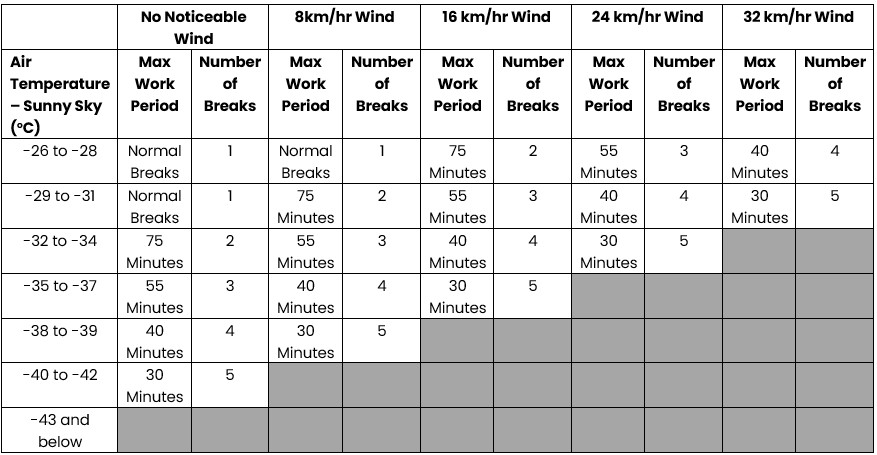
- Stop all non-emergency work when temperatures drop below -35oC.
Do not
- Allow workers that show signs of frostbite or hypothermia to continue working.
- Assign outdoor tasks during extreme cold alerts without first assessing risk and implementing appropriate controls.
- Allow workers to remain outside for extended periods without scheduled warm-up breaks.
- Allow work without proper PPE, including insulated gloves, boots, and layered clothing.
- Allow fuel-burning heaters or equipment to operate in enclosed spaces without proper ventilation.
|
| Worker Responsibility |
Do
- Complete a Hazard Assessment prior to starting work.
- Check the weather before heading out for work and dress for the weather. If working outdoors, consider the wind chill, not only absolute temperatures.
- Report damaged equipment, including heaters or cold-weather tools, to your supervisor.
- Report any cold-related incidents, unsafe working conditions or near misses to your supervisor, and Safety Manager immediately.
- Inspect the first aid kit to confirm it contains an emergency blanket and all required emergency supplies.
- Have some dry clothes in your vehicle as a supplement or to change layers that become wet.
- Wear insulating clothing in temperatures below 4oC.
- Dress in layers – multiple layers of thin clothing are preferable to on thick insulating layer.
- Stay dry. Monitor fatigue and perspiration – stop or slow down work intensity if you start sweating. Inspect PPE daily for damage or wetness. Replace worn or wet items immediately.
- Keep moving – even when doing static tasks. Flex your toes and fingers, rotate your arms, flex your legs.
- Stop working and get in the warm area if you lose sensation or feel pain in extremities (toes, fingers, nose, ears). If you experience mild hypothermia symptoms (shivering, fatigue, slurred speech), inform your supervisor immediately and return to a warm area.
- Go in a warm place and remove wet garments and footwear.
- Ensure you have water or other non-impairing fluids available and drink to compensate the water lost exhaling. Also have high-energy snacks to help maintain body heat.
- In a safe area, using the clothing and gloves you would when working outside, test to see if you can handle the tools with the added clothing.
- Check in at agreed intervals, either with your supervisor directly or your work alone app.
- Let your supervisor know when noticing other workers being affected by the cold.
- Take breaks as needed or, at a minimum, as recommended by the Work/Warm-up schedule in the Annex 1.
- Understand emergency procedures and how to respond to cold-related incidents.
- Use the buddy system when working alone to monitor each other’s condition
Do not
- Continue working if you are wet, cold, feel pain or do not feel your extremities.
- Work outside without wearing proper cold weather PPE, including insulated gloves, boots, and layered clothing.
- Ignore unsafe conditions, such as icy surfaces or malfunctioning equipment.
- Operate equipment with reduced dexterity, ensure hands are warm and functional before handling tools.
- Consume alcohol or caffeine before or during work in cold conditions, as they can impair heat retention and hydration.
|