| Purpose |
To protect Qualico’s employees and contractors from the negative effects of high temperature exposure during outdoor work, including immediate risks like heat stroke and long-term risks like skin cancer. This SWP promotes hydration, work/rest scheduling, and proactive planning to ensure worker safety, productivity, and compliance with heat stress safety regulations. |
| Definition |
High temperatures are defined as temperatures exceeding +28°C for acclimatized workers, regardless of the humidex factor. Unacclimatized workers face an increased risk of heat-related illnesses, particularly during sudden temperature spikes. Factors such as high humidity, heavy physical tasks, direct sun exposure, and lack of shade further exacerbate the risk of dehydration, loss of mental focus, and long-term health effects. |
| Hazards
This list of potential hazards is not comprehensive. Workers are required to complete a Hazard Assessment prior to starting this task to ensure all hazards are identified and controlled.
|
Physical:
- Burns from hot surfaces
- Heat Stress
- High humidity
- Heat Exhaustion
- Heat Stroke
- Dehydration
Psychosocial:
|
| Controls |
Engineering:
Administrative:
- Hydration
- Work/Rest Scheduling
- Communication devices
- Hazard Assessment
Personal Protective Equipment:
- Light colored clothing and hat
- Sun Protection including SPF sunscreen and sunglasses with UV protection
|
| Work Site Supervisory Responsibility |
Do
- Follow the same directions as recommended for workers.
- Conduct a pre-shift heat assessment, including temperature and humidex monitoring.
- Provide training on recognizing symptoms of hot-related illnesses.
- Check frequently on workers working alone, even if they have communication devices.
- Monitor workers for signs of heat illness. Look for flushed skin, confusion, fatigue, dizziness.
- Give your team time to acclimatize – if hot weather onsets quickly, it takes 4-7 working days for the body to acclimatize.
- Ensure adequate water supplies are available for all workers.
- Limit exposure time and rotate workers in and out of hot environments.
- Identify shaded areas or provide temporary shade structures on-site.
- Take workers that exhibit signs of heat illness to a cool, shaded area (even if they think they are fine).
- Provide water. Call 911 if the workers are unresponsive or do not seem to improve.
- Monitor weather forecasts for extremely Hot conditions and, when possible, reschedule work to take place during the cooler parts of the day. Heat Index App available to all supervisors and workers.
- Stop all non-emergency work when the temperature reaches above 40oC.
Do not
- Allow Workers that show signs of heat illness to continue working.
|
| Worker Responsibility |
Do
- Check the weather before heading out for work and dress for the weather. Consider the humidex factor, not only absolute temperatures.
- Wear light colored, loose-fitting, full-length clothes, UV-rated sunglasses and a hat when working in hot, sunny environments.
- If wearing short sleeves, apply a broad-spectrum sunscreen with at least SPF 30. Re-apply every 2 hours if you are sweating.
- Drink cool water every 15–20 minutes, even when not thirsty. Use electrolyte drinks in balance, avoiding sugary beverages.
- Eat light, easy to digest meals.
- Plan your most strenuous tasks in the cooler morning hours.
- Check in at agreed intervals, either with your supervisor directly or your work alone app.
- Let your supervisor know if you or a coworker shows signs of heat illness (confusion, fatigue, dizziness, etc.), move immediately to a shaded/cool area, inform your supervisor, and hydrate with water or an electrolyte-based drink.
- Understand emergency procedures and how to respond to hot-related incidents.
- Take breaks frequently in a cool or shaded area. An air-conditioned vehicle, a basement or a show home are all good options.
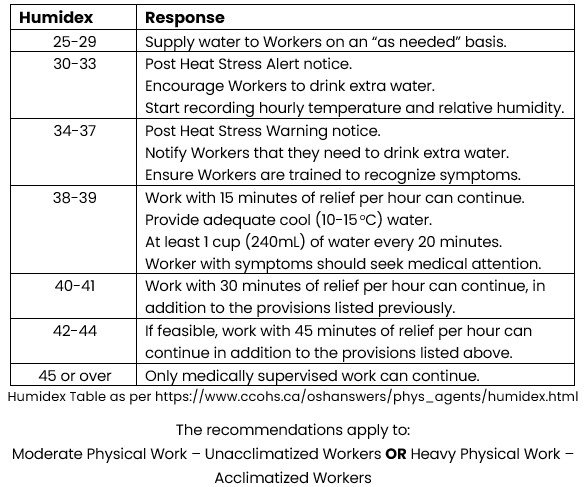
- Adjust the length of the breaks based on temperature as shown in the Recommended Actions Based on Humidex Reading in the Annex.
- Use the buddy system when working alone to monitor each other’s condition.
Do not
- Drink coffee, soda or energy drinks instead of water. All of these contain high levels of caffeine, which speed dehydration and accelerate heart rate, making them dangerous in the heat.
- Drink alcohol prior to working in the heat. Many cases of heat stroke have occurred the day after a night out.
- Do not exceed scheduled time in hot environments; take regular cool-down breaks as instructed.
- Eat heavy or hot foods that can add to your body’s heat load.
|